
🚚 CDL Driver's License: Quick CDL Training Program Guide
🚩 Get a license quickly / 5–7.5 weeks training / Funding training programs
In the United States, Commercial Driver’s License (CDL) holders are essential to industries like logistics, construction, agriculture, and transportation. As supply chain demands rise and the driver workforce ages, both government agencies and employers are actively offering financial assistance to encourage more individuals to enter this high-demand, high-stability profession.
Commercial driving in the United States requires a commercial drivers license, often shortened to CDL, and the training path is organized around safety and regulatory standards. Quick CDL training programs aim to help learners move through classes and driving practice efficiently, but they still follow the same core steps.
Anyone 18 or older can participate in training
In most states, a person who is 18 or older and holds a valid non commercial drivers license can begin the CDL process. Typical steps include passing a medical exam from a certified examiner, meeting vision and health standards, and maintaining a driving history that satisfies state rules.
✅ Why You Should Get a CDL?
- High Starting Pay: Entry-level CDL drivers typically earn $45,000–$60,000/year; experienced or specialty route drivers can make $80,000–$100,000+.
- Quick Entry: Most CDL programs take just 5 weeks to complete.
- Strong Job Security: CDL drivers are in demand across both rural and urban areas in all states.
- Flexible Work Options: Choose long haul or local routes, day or night shifts—customize your work-life balance.
🏷️ How Do I Get a Low-Cost Supported CDL?
✅ 1. Government-Funded Programs
| Program Name | Coverage | Eligibility | Target Group |
|---|---|---|---|
| WIOA (Workforce Innovation and Opportunity Act) | Partial tuition, books | Unemployed, low-income, SNAP recipients | Adults, career changers |
| State Workforce Grants | CDL programs offered through local agencies | Varies by state | State residents |
| Vocational Rehab Grant | Full training coverage + job coaching | Physical or mental disabilities | People with disabilities |
| GI Bill® / VRRAP | Partial tuition reimbursement, licensing fees | U.S. military veterans | Veterans and dependents |
✅ 2. Employer-Sponsored CDL Programs
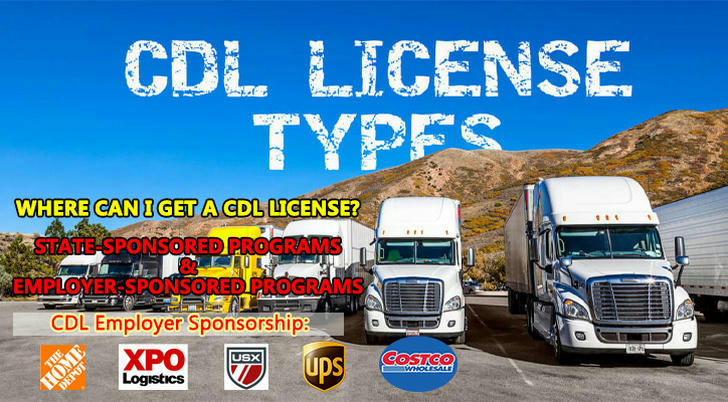
These major employers offer CDL support through paid training, tuition reimbursement, and guaranteed job placement—ideal for those wanting to learn while earning:
🚛 XPO Logistics
- 7-Week CDL Training Plan
- Offers CDL tuition reimbursement or in-house CDL training
- No binding contract required—great for beginners with a standard license
- First-year average salary: $55,000–$75,000
🏠 Home Depot
- Five to seven and a half weeks of CDL training program
- Offers CDL-related positions + tuition reimbursement options
- Flexible schedules make it easy to study while working
- Starting wage: $25–$32/hour with room for advancement
🚚 UXP (U.S. Xpress)
- Up to $7,000 in tuition reimbursement
- Partners with CDL schools; tuition is prepaid and deducted over time
- 12-month work agreement required; forgiven upon completion
- Paid apprenticeship available—earn up to $4,000/month during training
📦 UPS
- Internal career path to CDL roles with education assistance
- Usually begins in entry roles like package or freight handlers
- Hourly wage: $33–$39 + paid leave and full medical coverage
🛒 Costco
- Hires CDL drivers for full-time trucking and logistics roles
- No training contract—direct hire for qualified CDL holders
- Annual salary: $70,000+ with bonuses and health insurance
📌 Most of these roles come with health insurance, 401(k) retirement plans, paid time off, and holiday bonuses, making them ideal for stable, long-term employment.
How to apply for an employer sponsored CDL program
Some large carriers and schools have offered employer sponsored CDL training programs that reduce or spread out tuition costs. Availability changes frequently, so the description here is meant as a general process rather than a current list of openings. When such a program exists, an applicant usually completes a form that reviews age, driving record, legal work status, and ability to meet medical and background standards. If an individual is accepted into this type of training arrangement, staff members typically outline the schedule, housing options if any, and the length of any work commitment after training. Before signing enrollment agreements or reimbursement forms, it is important to read them carefully and to ask questions about what happens if the driver leaves the company early or cannot finish the program.
✅ How to Complete the CDL License Certification?
1. FMCSA Certification
- Training must meet Federal Motor Carrier Safety Administration (FMCSA) standards.
- Must complete Entry-Level Driver Training (ELDT).
2. State DMV/DOT Certification
- Each state’s DMV or DOT manages CDL testing.
- Includes written test + driving test + background check.
3. Training Provider Registry (TPR)
- Must attend a CDL school registered with FMCSA’s TPR list.
- Only TPR schools can upload your completion record to FMCSA.
❓ Frequently Asked Questions (FAQ)
Q: Can I apply for CDL training without experience?
A: Yes! Most programs accept beginners, and employers offer full training.
Q: How long does CDL training take?
A: Typically 5–8 weeks, depending on your state and program.
Q: Will I get paid during training?
A: Some employers offer weekly stipends ($500–$700); government programs may provide living assistance but not wages.
Q: What does the training include?
A: CDL training combines classroom learning (safety, laws, equipment) with practical driving (backing, highway, ramp starts, etc.).
Q: How soon can I work after getting my CDL?
A: Most graduates start working within 1–2 weeks of passing the test.
📊 Age Demographics of CDL Holders (2026 Estimates)
| Age Range | Estimated Share | Characteristics |
|---|---|---|
| 18–24 | 12% | New entrants, typically local deliveries |
| 25–34 | 23% | Recently certified, seeking stability |
| 35–54 | 44% | Core workforce, experience-based growth |
| 55+ | 21% | Career changers, pre-retirement earners |
👉 CDL licenses are accessible early—18+ for intrastate driving, and 21+ for interstate work.
🔚 CDL: Your Road to a High-Income, High-Stability Career
Whether you're fresh out of high school, switching industries, or re-entering the workforce, CDL training is a smart path to a reliable and well-paying job. With government grants and employer-sponsored training available, you can launch your trucking career with minimal debt and maximum opportunity.
Now is the perfect time to get started in transportation.
Don’t wait until the driver shortage worsens—apply today for a CDL funding program and take control of your future behind the wheel.
A careful approach to the CDL journey includes reviewing state requirements, understanding age limits, studying for written tests, and comparing training providers and cost structures. The programs and examples described here are meant to show how quick CDL training is typically organized rather than to promote specific openings. By focusing on the skills, safety knowledge, and financial planning involved, an individual can decide whether pursuing a CDL fits their long term plans in transportation and related fields.